

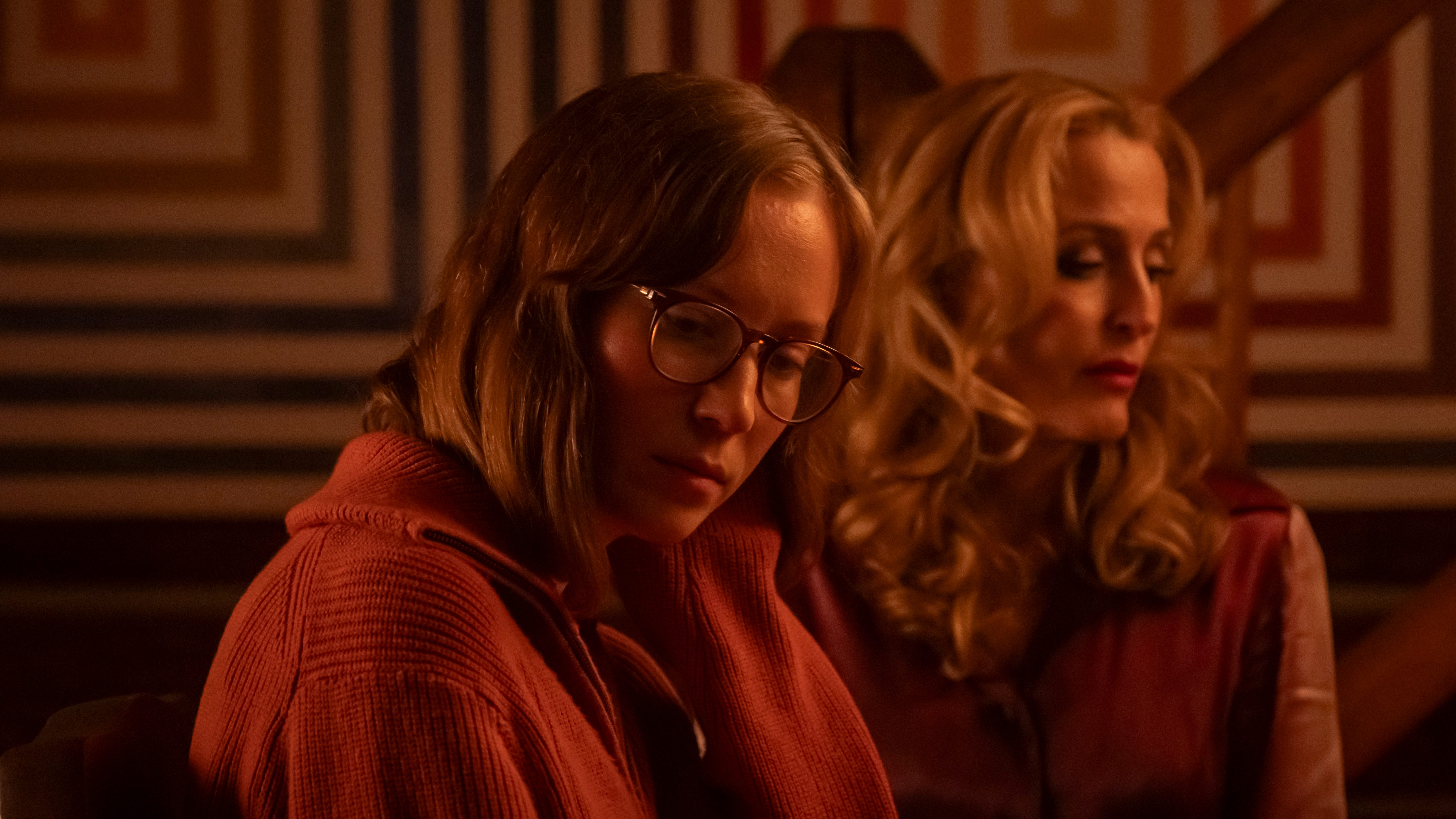
There’s a particular joy to watching a film that should not work. But trust Jane Schoenbrun, who weirded out audiences with We’re All Going to the World’s Fair and I Saw the TV Glow, to make the most unconventional ode to the slasher in Teenage Sex and Death at Camp Miasma. And this time she has the star power.
Yes, Hannah Einbinder has name recognition and familiarity in her own right, but Gillian Anderson was always going to steal the show. Here she goes full camp as Billy, the original Final Girl of an 80’s horror movie franchise Einbinder’s Kris, a director (and Schoenbrun surrogate) is tasked with rebooting. They are a meeting of opposites that should oppose: Kris is a stereotypically buttoned up avatar for Gen Z, while Billy is a Norma Desmond who’s comfortable in her skin, swishing across the screen with a lavish Southern accent and fedora.
I reiterate, this should not work. The meta commentary of rebooting a franchise that has long since fallen into disgrace has been done, the movie isn’t really scary, it doesn’t bother to explain or tie much of anything together, it’s not actually about teenagers, and it’s a tribute to a genre it acknowledges is all about flesh and fluids while being a highly cerebral experience.
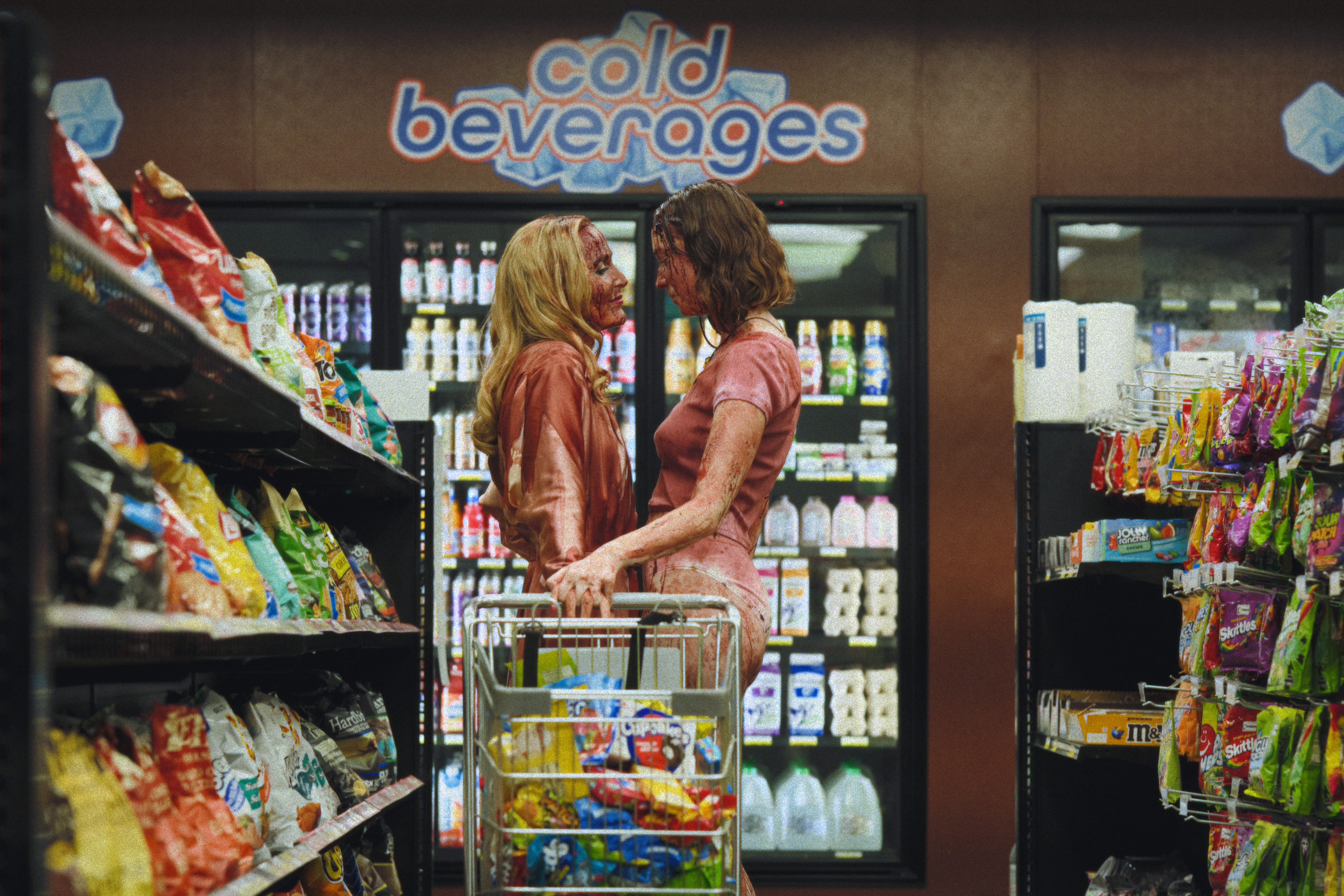
How exactly, then, does Teenage manage to be so charming and fun? For one, by being fearlessly personal and including blood fountains that put Kill Bill to shame. Schoenbrun may have already given a killer pitch by describing her latest as Portrait of a Lady on Fire set in a Friday the 13th sequel, but in terms of concept, it may actually have more in common with Losing Ground, which also follows another repressed intellectual woman looking to experience ecstatic bodily passion.
Kris has a concept of her own to execute, and is very aware that she’s been hired in part because the studio execs want a queer filmmaker to make a famously transphobic franchise profitable again. As she becomes more and more fascinated with the reclusive Billy, she’s forced to confront her hangups about sex and her art. It’s certainly easy to sympathize with her clear love for a genre that’s basically built on a terror of anyone deemed The Other and both exploits and punishes any form of sexual expression, especially when it comes to female sexuality.
Schoenbrun is likewise obligated to grapple with this legacy, having long since embraced being a trans nonbinary filmmaker, but the film’s greatest asset is a refusal to judge, not for love, for sex, or so-called frigidity. As Kris and Billy’s connection becomes more intimately charged, Teenage becomes Schoenbrun’s most sensual film yet, with Kris’s sexual awakening not only transforming her into a liberated scream queen where all her darkest fantasies play out, it melts the frozen winter landscape into a summer haze, where blood is practically a lubricant.
It’s very on par for a series with a slasher villain dubbed Little Death (Jack Haven), a euphemism for the orgasm. In Teenage, the personal becomes a defense against a hostile outside world, and judgment is converted into rebirth. It’s also a tribute to female creation itself, how those who are often deemed the most disposable can survive beyond the story scripted for them.
Complexity, mystery, and fun are so often much lamented missing ingredients in today’s cinema, so such an unapologetically weird homage and sendup of 80’s cinema that’s often disdained as a lower art form, which features such chemistry and presence between two actresses as committed as the artist directing them, is an irresistible delight. It also feels like the culmination of a very personal cinematic journey Schoenbrun has been taking audiences on over the last five years.
This is a filmmaker who has been coming into their identity during their last two films, but here, they are coming into their body, and it’s a wonder unlike anything seen on-screen, for all the familiarity of the imagery. I can’t imagine the ending is truly written yet, but hey, that’s what sequels are for.
Grade: B+